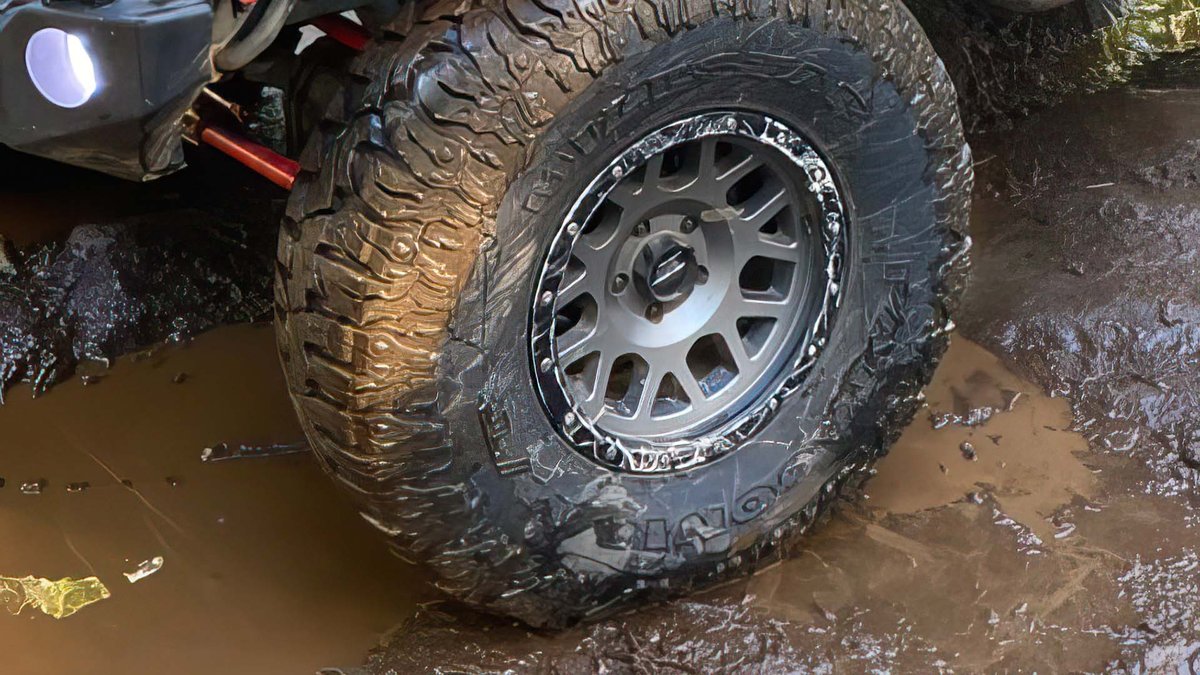
Picture this: You’re deep on a remote trail, the sun glinting off your rig, and ahead, a stretch of jagged rocks or loose, shifting sand. What stands between you and getting stuck, or worse, damaging your vehicle? More often than not, it's something surprisingly simple yet critically misunderstood: your tire pressure. Understanding tire pressure for off-roading isn't just a pro tip; it's the fundamental key to unlocking traction, comfort, and safety when the pavement ends.
Many off-roaders learn the hard way that highway pressures are a recipe for disaster on the dirt. Lowering your PSI strategically transforms your tires, allowing them to grip, absorb, and adapt in ways that higher pressures simply can't. This guide dives deep into the art and science of airing down, equipping you with the knowledge to conquer any terrain with confidence.
At a Glance: Why Your Off-Road Tire Pressure Matters
- Bigger Footprint: Lower pressure creates a larger contact patch, increasing grip on loose or uneven surfaces.
- Conforms to Terrain: Tires flex around obstacles (rocks, roots), reducing the risk of punctures and improving ride comfort.
- Extends Tire Life: Reduces stress on sidewalls and minimizes wheel spin, helping your tires last longer.
- Improves Ride Comfort: Acts like an extra layer of suspension, absorbing impacts and smoothing out the ride.
- Safety First: Requires careful monitoring and proper reinflation for highway driving.
The Unseen Power of a Lower PSI: Why Airing Down Is Your Best Friend
Off-roading throws everything at your tires: sharp rocks, deep mud, soft sand, and unpredictable terrain. Unlike a paved road, which offers a consistent, hard surface, off-road conditions demand adaptability. This is where tire pressure becomes your most potent, yet often overlooked, tool.
When you reduce the air pressure in your tires, you fundamentally change their behavior. Think of it like this: a fully inflated tire is stiff and rigid, designed to roll efficiently on smooth surfaces. Off-road, this stiffness means a smaller contact patch with the ground, concentrating all your vehicle's weight onto a tiny area. It’s like trying to walk across deep snow in high heels—you sink right in.
Lowering your PSI, however, allows the tire to 'bulge' out, increasing its length by up to 80% and its width by about 20%. This significantly larger footprint does a few incredible things:
- Unparalleled Grip: More rubber on the ground means better traction. Whether you're crawling over slick rocks or powering through deep sand, that increased contact patch provides the grip you need to move forward. It spreads your vehicle's weight more effectively, preventing you from digging in or slipping.
- Obstacle Conformity: A softer tire can literally mold itself around rocks, roots, and other obstacles. Instead of being punctured or pinched, the tire flexes, absorbing the impact and reducing the stress on both the tire and your vehicle's suspension. This flexibility also dramatically reduces the risk of punctures by preventing sharp objects from being driven directly into a taut sidewall.
- Enhanced Comfort: Ever feel every bump and jolt on a rough trail? Your tires, when properly aired down, act as an additional suspension component, absorbing impacts and vibrations before they reach the cabin. This significantly improves ride comfort, reducing fatigue for you and your passengers.
- Reduced Wheelspin: With better grip, your tires are less likely to spin uselessly, which not only saves your tires from excessive wear but also helps preserve the trail by minimizing rutting and erosion.
In essence, airing down transforms your tires from rigid rollers into flexible, grippy, terrain-hugging machines. It’s a game-changer for anyone serious about off-road exploration.
Dialing In Your Pressure: Terrain-Specific PSI Settings
There's no single magic number for off-road tire pressure; the ideal PSI depends heavily on the terrain, your vehicle's weight, tire type, and even your driving style. However, seasoned off-roaders typically start with a general baseline and adjust from there.
General Starting Point: For most standard off-roading with non-beadlock wheels, 20 PSI is a common and safe initial drop from highway pressures. From there, you'll fine-tune based on the conditions ahead.
Here’s a breakdown of common PSI recommendations for various terrains:
Rock Crawling & Uneven Terrain
When navigating treacherous rock gardens or highly uneven surfaces, maximum flexibility and grip are paramount.
- Recommended PSI: 12-18 PSI.
- Why: This range allows the tire to envelop rocks, maximizing the contact patch and reducing the chance of sharp edges causing punctures. It also helps the tire flex without de-beading (the tire separating from the rim).
Sand Driving
Sand demands flotation to prevent your vehicle from digging in. A wider contact patch helps your tires "float" over the sand instead of cutting into it.
- Soft, Deep Sand/Dune Bashing: 10-15 PSI (or even 10-14 PSI for dunes).
- Why: This extremely low pressure maximizes your tire's footprint, allowing it to act like a snowshoe, distributing your vehicle's weight over a larger area. This prevents you from sinking and getting stuck.
- Hard-Packed Sand: 18-25 PSI.
- Why: Less flotation is needed here, so you can maintain a bit more pressure for better steering response and reduced rolling resistance.
Sticky Mud
Mud presents a unique challenge, requiring a balance between flotation and the ability to shed mud from the tread.
- Standard Rims: 15-20 PSI.
- Beadlock Wheels: 10-12 PSI.
- Why: A slightly higher pressure on standard rims helps prevent the tire from de-beading if it gets bogged down and starts to spin. Beadlock wheels offer superior bead retention, allowing for lower pressures to enhance grip in the goo.
Snow & Ice
Similar to sand, snow often requires flotation, but traction on packed or icy surfaces also matters.
- Packed Snow: 15-20 PSI.
- Deep Powder: 12-15 PSI (non-beadlock) or 8-10 PSI (beadlock).
- Mixed Frozen Terrain: 14-18 PSI.
- Why: Lower pressures help spread weight for flotation in deep snow, while slightly higher pressures on packed snow or mixed frozen terrain still offer improved grip without risking instability.
Mixed Terrain
If your trail includes a variety of conditions, a mid-range pressure offers a good compromise.
- Non-Beadlock: 18-25 PSI.
- Bead Grip: 15-20 PSI.
- Beadlock: 12-18 PSI.
- Why: These ranges provide a versatile balance of grip, flexibility, and de-beading resistance across varied surfaces.
Important Considerations: - Heavy Vehicles: If your rig is loaded down with gear, a rooftop tent, or recovery equipment, add 2-4 PSI to the recommended pressures, especially in snow or when facing hidden obstacles. The extra weight demands a bit more internal support.
- Towing Off-Road: When towing a trailer off-road, increase your tire pressure by 3-5 PSI over typical off-road recommendations. This accounts for the added tongue weight and overall strain on your tires.
- Speed Reduction: This is non-negotiable. Lower tire pressure significantly reduces stability and increases heat buildup at speed. Always reduce your driving speed, especially around corners (by 30-40%), to prevent blowouts and dangerous instability.
The Foundation: Tire & Wheel Choices
The right tire and wheel combination forms the bedrock of your off-road performance. They dictate how low you can safely air down and how well your vehicle will perform.
Choosing Your Tread: A/T, M/T, or Hybrid?
Your driving habits should heavily influence your tire choice.
- All-Terrain (A/T) Tires: The versatile workhorse.
- Best For: Drivers who spend most of their time on pavement but want weekend off-road capability. They handle gravel and wet conditions well with reasonable road noise.
- Caveat: Their tread design can sometimes collect mud, limiting performance in very sticky situations. Most A/T tires last 40,000 to 60,000 miles with proper maintenance, with premium options pushing up to 80,000 miles. BFGoodrich All-Terrain tires, for example, typically deliver 50,000-60,000 miles.
- Mud-Terrain (M/T) Tires: The off-road specialist.
- Best For: Maximum off-road capability. These tires feature large, aggressive tread blocks with deep voids designed for shedding mud, sand, and debris. They excel at gripping rock faces and crevices.
- Downside: Expect increased road noise and lower fuel economy on pavement due to their aggressive tread design.
- Hybrid (R/T - Rugged Terrain) Tires: The best of both worlds?
- Best For: Drivers who split their time equally between pavement and trails. Hybrid tires bridge the gap between A/T and M/T designs, offering better off-road traction than A/T with more civilized on-road manners than M/T.
Understanding Load Index
Don't overlook the Load Index—it's critical for safety and performance, especially for heavily equipped off-road vehicles.
- What it is: The Load Index indicates the maximum weight each tire can safely carry.
- How to calculate: To determine the minimum load rating you need, find the higher Gross Axle Weight Rating (GAWR) on your vehicle's door jamb sticker, then divide that number by two.
- Why it matters: Tires with a higher load index often feature multi-ply sidewalls, which are inherently tougher and better equipped to handle lower pressures without damage.
Manufacturer Specialties
Many manufacturers offer specialized off-road tires with unique features:
- Mickey Thompson: Known for an extensive range of specialized off-road tires.
- Cooper's Discoverer STT Pro: Praised for its robust construction.
- BFGoodrich: Integrates race-tested technology like CoreGard, which provides 20% stronger sidewalls for enhanced durability.
Wheel Types & Their Safe PSI Limits
Your wheel type is a major factor in how low you can safely drop your PSI without risking de-beading. De-beading occurs when the tire bead separates from the rim, leading to sudden air loss, potential blowouts, and rim damage.
- Standard (Non-Beadlock) Wheels:
- Minimum Safe PSI: 10-15 PSI.
- Risk: High de-beading risk below 10 PSI. These are DOT legal and lightweight, making them common.
- Bead Grip Wheels:
- Minimum Safe PSI: 8-12 PSI.
- Features: Designed with enhanced bead retention, reducing de-beading risks by up to 70% compared to standard rims. They are moderately weighted.
- Risk: Moderate de-beading risk below 8 PSI.
- Beadlock Wheels:
- Minimum Safe PSI: 4-8 PSI.
- Features: Mechanically clamp the tire bead to the rim, essentially eliminating de-beading risks. They require more maintenance.
- Legality: DOT legality varies by state.
- Risk: Low de-beading risk when properly set up and maintained.
Understanding these limits is crucial. Pushing your standard rims too low can quickly lead to a frustrating, and potentially dangerous, de-beading incident.
Tools of the Trade: Deflation and Inflation
You can't effectively manage tire pressure off-road without the right equipment. Having reliable deflation and inflation tools is as important as having a recovery strap.
Airing Down: Deflation Tools
Forget the old trick of using a stick to press the valve stem—that's imprecise and time-consuming.
- Manual Deflators: These screw onto your valve stem and quickly release air. They require you to monitor pressure with a separate gauge and can take patience to hit a precise PSI.
- Precision Deflators: These tools attach to your valve stems and often have a built-in gauge, allowing you to gradually release air while monitoring in real-time. They offer good accuracy.
- Automatic Deflators: The most convenient option. These screw onto your valve stem, and you set your target PSI. They automatically stop airflow once that pressure is reached (typically within ±1 PSI accuracy). They can deflate a tire in 2-5 minutes, allowing you to air down all four tires simultaneously.
Airing Up: Inflation Tools (Before Pavement)
Reinflating your tires to highway pressures (typically 30-35 PSI, often 35-40 PSI for most vehicles) is crucial for safety before returning to paved roads. Driving with underinflated tires on highways causes poor stability, rapid and uneven tire wear, dangerous heat buildup, and a significant risk of blowouts. This is where Your guide to airing up comes in handy.
- Portable Air Compressors: These 12V units are powered by your vehicle's battery. They vary widely in airflow (CFM) and often have built-in gauges. Good for occasional use, but inflation times can range from 5-10 minutes per tire.
- CO2 Tanks: Offer lightning-fast inflation, often under 60 seconds per tire. They are lightweight and highly portable but have a higher per-use cost since you'll need to refill the tank.
- Onboard Air Systems: For serious off-roaders, these permanent vehicle-mounted compressors (typically 4-8 CFM) come with air tanks and controllers. They can inflate four tires in approximately 6 minutes and are suitable for continuous duty, powering air lockers, or running air tools.
Tire Pressure Monitoring Systems (TPMS)
Most factory TPMS are calibrated for highway pressures. When you air down for off-roading, your TPMS will likely trigger constant low-pressure warnings, which can be annoying. Aftermarket systems exist that allow for custom low-pressure thresholds, but many off-roaders simply accept the dashboard warning light as part of the process or disable it if possible.
Beyond Pressure: Holistic Tire Maintenance
While tire pressure is paramount, it’s just one piece of the puzzle. Proper off-road tire maintenance extends their life and keeps you safe.
Tire Rotation
Regular rotation ensures even wear across all tires, which is vital for balanced performance and prolonging tire life.
- Frequency: Every 5,000 to 7,500 miles, or more often if you frequently hit the trails.
- 4WD Vehicles: The Rearward Cross pattern is recommended: rear tires move straight to the front, and front tires cross to opposite sides at the rear.
- With Full-Size Spare: Utilize a five-tire clockwise rotation to integrate your spare into the wear cycle.
- Watch for Cupping: If you notice scooped-out worn spots on your tires (tire cupping), it often indicates worn shock absorbers. Symptoms include unusual road noise, steering wheel or seat vibrations, vehicle pulling, and visible uneven wear patches.
- Tread Depth: Regularly monitor your tread depth. Replace tires when they fall below 5/32 inches for optimal off-road performance and safety.
Cleaning and Storage
Your tires work hard; give them the care they deserve after every adventure.
- Cleaning: Clean your tires immediately after every off-road trip. Use a pressure washer and warm water to blast away thick mud and debris, then scrub with a tire brush. Avoid petroleum-based cleaners, which can degrade rubber. Mild dish soap or specialized cleaners like Spray Nine work well for stubborn mud stains.
- Storage: If you're storing tires long-term, choose a cool, dry place (ideally 55-59°F). Avoid temperatures outside the 45-68°F range. Stack mounted tires horizontally, or stand unmounted tires upright (never hang them, as this can distort them). Rotate stored tires monthly to prevent flat spots and dry rot.
- Protection: Use tire covers to shield your tires from UV rays, dirt, and weather damage, especially if your vehicle is parked outdoors. Apply a quality tire protectant regularly. Keep tires away from ozone-producing equipment like generators and battery chargers, as ozone accelerates rubber degradation.
Crucial Reminders for Safe Off-Roading
Mastering tire pressure is a skill that evolves with experience. Always prioritize safety.
- Reduce Your Speed: When aired down, your vehicle's handling characteristics change dramatically. Lower speeds are essential to maintain control, prevent heat buildup, and avoid de-beading or blowouts. Reduce cornering speeds by 30-40%.
- Reinflate Religiously: We can't stress this enough. Never drive on paved roads with off-road tire pressures. Always reinflate to your manufacturer's recommended highway PSI (check your door jamb sticker) before hitting the asphalt. Failure to do so risks dangerous instability, uneven and rapid tire wear, and potentially catastrophic blowouts from heat buildup.
- Check Regularly: Make it a habit to check your tire pressure before every off-road adventure, after returning to pavement, and at least monthly for regular driving. Your tires are your only contact with the ground, so treat them with respect.
Your Off-Road Tire Pressure Action Plan
You've got the knowledge; now it's time to put it into practice. Here’s a concise checklist to ensure you’re always prepared:
- Adjust Pressure by Terrain: Understand the 10-25 PSI range for off-road conditions, typically aiming for 12-18 PSI on rocks and uneven trails.
- Choose Wisely: Select tire types (A/T, M/T, Hybrid) based on your primary driving needs and ensure the load index matches your vehicle's weight.
- Rotate Regularly: Implement a tire rotation schedule every 5,000-8,000 miles using the correct pattern for your drivetrain.
- Monitor Tread Depth: Replace tires when tread depth falls below 5/32 inches to maintain optimal traction and safety.
- Clean Promptly: Wash your tires immediately after every off-road trip to remove mud and debris.
- Store Smart: Keep spare or seasonal tires in a cool, dry place, shielded from UV rays, and rotate them monthly.
- Gear Up: Carry essential deflation (manual, precision, or automatic deflators) and inflation equipment (portable compressor or CO2 tank).
- Reinflate for Roads: Always reinflate your tires to highway pressures (35-40 PSI is common) before driving on paved surfaces.
- Daily Checks: Check tire pressure before every off-road outing and monthly for daily driving.
- Slow Down: Reduce your driving speed, especially around corners, when operating with lowered tire pressure off-road.
Mastering tire pressure for off-roading is a fundamental skill that transforms your driving experience, enhances safety, and protects your investment. With the right knowledge and tools, you're ready to tackle any trail the wilderness throws your way.